In 2026, global buyers are looking beyond shiny surfaces when selecting Stainless Pipe Fitting products. They need reliable geometry, traceable material, clean weld preparation, and stable performance under pressure. The World Stainless Stainless Steel in Figures 2024 report recorded approximately 58.4 million tonnes of stainless crude steel production in 2023. That volume reflects strong demand across chemical processing, food equipment, water treatment, energy, and construction.
The market is broad, but purchasing mistakes remain common. A fitting may match the nominal pipe size yet fail because of poor wall thickness, incorrect grade, or weak documentation. ASME B16.9 covers factory-made wrought butt-welding fittings, while ASME B16.11 addresses forged socket-welding and threaded fittings. These standards help buyers compare products more objectively. Details matter. So does traceability.
Tim Collins, Secretary General of worldstainless, has described stainless steel as “a permanent material,” highlighting its long service life and recyclability. That principle supports a practical buying approach: assess lifecycle value, not only the initial quotation. This guide examines the top Stainless Pipe Fitting types for global buyers, including elbows, tees, reducers, caps, couplings, and unions. It considers connection method, grade selection, pressure class, surface finish, and application risk. No ranking fits every facility. That limitation matters. A polished catalogue can still conceal inconsistent tolerances or incomplete mill certificates. Buyers should verify test reports, heat numbers, dimensional records, and applicable standards before approving a shipment. Availability is useful, but evidence is better.
2026 Top Stainless Pipe Fitting Types for Global Buyers
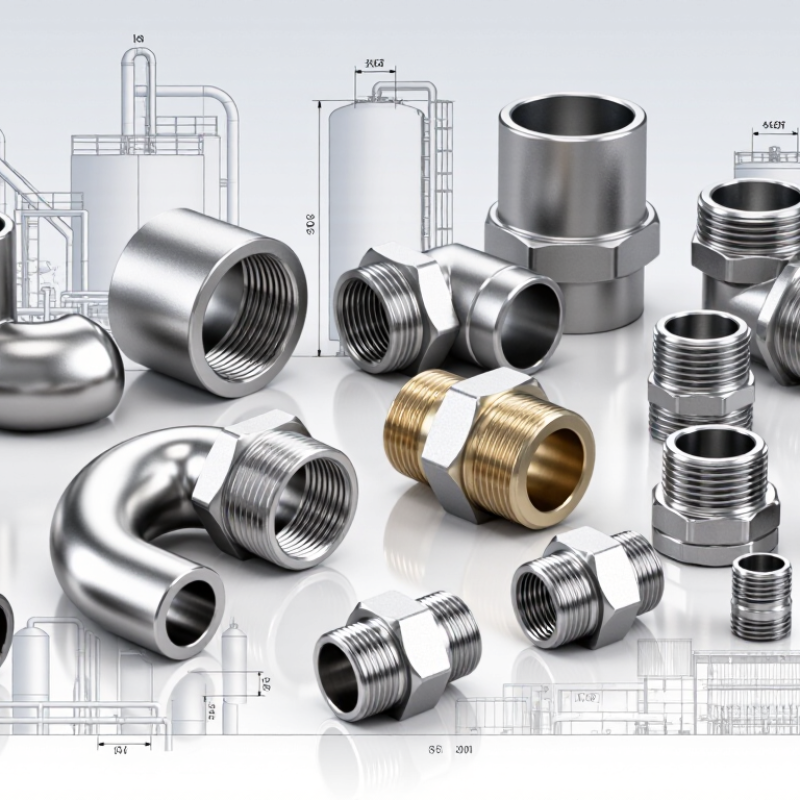
Stainless pipe fittings connect, redirect, control, or close process piping. Common types include elbows, tees, reducers, couplings, caps, and unions. Their classification starts with the connection method: butt-weld, socket-weld, threaded, or flanged. Each option affects installation time, sealing performance, and maintenance access.
Global buyers should compare dimensions through NPS or DN, wall thickness, pressure class, and schedule. ASME B16.9 covers many wrought butt-welding fittings, while ASME B16.11 addresses forged socket-weld and threaded fittings. EN 10253 is widely used for European butt-welding fittings. These systems are not interchangeable by appearance alone. Check the actual edition and project specification.
Material classification also matters. ASTM A403 commonly covers wrought austenitic stainless steel piping components, including grades such as 304L and 316L. However, grade selection should reflect chloride exposure, temperature, fluid chemistry, and welding conditions. A fitting marked “316L” still needs heat numbers, inspection records, and dimensional checks. This is where practical experience helps. Measure wall thickness at several points, not only at the label. Surface finish can mislead the eye. Standards improve reliability, but they do not replace competent inspection. A small mismatch in DN, schedule, or face dimensions can delay an entire installation.
Industrial piping systems rely on several stainless fitting types, each serving a specific flow and installation need. Elbows redirect media around equipment or structural obstacles. Tees divide or combine flow. Reducers connect pipes with different diameters, while couplings and unions support maintenance access. Flanges provide bolted connections for valves, pumps, and inspection points. For hygienic processing, smooth-finish fittings reduce residue traps, although surface finish alone cannot correct poor drainage design.
Material selection requires more than choosing stainless steel by habit. ASTM A403 covers wrought austenitic stainless steel fittings, including common 304L and 316L grades. The latter usually offers stronger resistance to chloride exposure. ASME B16.9 defines dimensions for factory-made butt-welding fittings, helping buyers compare geometry across suppliers. World Stainless reported 58.4 million tonnes of global crude stainless steel production in 2023. That scale supports broad availability, but it also increases the risk of inconsistent documentation and substitution.
Check certificates, wall thickness, pressure ratings, and weld preparation before approval. A fitting may look perfect and still fail a traceability review. This is often overlooked. Grand View Research has projected continued growth in the industrial pipe fittings market, driven by water, chemical, energy, and process infrastructure. Yet market growth does not guarantee correct selection. Buyers should verify corrosion conditions, temperature cycles, dimensional standards, and installation tolerances. A cheaper reducer can create expensive alignment problems later. That shortcut deserves reconsideration.
2026 Top Stainless Pipe Fitting Types for Global Buyers
Material selection should begin with the service environment, not the lowest quotation. Grade 304 and 304L suit many indoor water, air, and general process lines. Grade 316 and 316L offer better resistance to chlorides because molybdenum reduces pitting risk. Duplex 2205 provides higher strength, but welding and heat control require stricter procedures. Do not treat “stainless steel” as one material.
Pressure ratings depend on more than the grade. Diameter, wall thickness, temperature, fitting geometry, and design code all affect allowable pressure. A thick-wall butt-weld elbow may handle a different load than a threaded fitting of the same nominal size. Check relevant standards, such as ASME or EN requirements, before comparison. The rating must match the complete piping system.
Connection method changes installation time and long-term reliability. Butt-weld fittings create smooth internal passages and suit hygienic or high-pressure systems. Socket-weld fittings work well on smaller sizes, while threaded fittings simplify maintenance but may create crevices. Flanged connections support frequent disassembly. Press connections can reduce hot work, yet tool compatibility and sealing quality deserve careful review.
Small details matter. Request heat numbers, material certificates, dimensional reports, and pressure-test records. Inspect surface finish around welds and threads. A polished fitting can still have the wrong alloy. That mistake is easy to miss. Personally, I would also question unusually low prices, because missing traceability often appears later during inspection or service.
Material grades, pressure ratings, and connection methods based on commonly used ASTM and ASME standards.
General-purpose austenitic stainless steel for water, food-processing, and non-chloride services. Minimum tensile strength shown: 515 MPa for 304 and 485 MPa for 304L.
Molybdenum-bearing grades offering improved resistance to chlorides and marine environments. Minimum tensile strength shown: 515 MPa for 316 and 485 MPa for 316L.
321 is stabilized for elevated-temperature service, while 904L provides high corrosion resistance in aggressive chemical applications.
Threaded fittings are commonly rated Class 2,000, 3,000, or 6,000. Socket-weld fittings are commonly rated Class 3,000, 6,000, or 9,000. Butt-weld fittings are pressure-designed according to pipe wall thickness, material, temperature, and applicable design code.
Material values represent minimum tensile requirements commonly specified in ASTM A240 product standards. Actual fitting pressure capacity depends on fitting standard, size, schedule, temperature, material condition, and design code.
Fluid selection should drive fitting selection, not catalog availability.
For potable water, low-chloride service, and many food lines, 304L often provides practical corrosion resistance. Choose 316L when chlorides, brine, coastal exposure, or chemical cleaning raise pitting risks. That rule is useful, but not absolute. Temperature changes the decision. Pressure, welding method, and crevice geometry matter too. For acidic, reducing, or high-temperature fluids, obtain corrosion data before approving stainless fittings.
Do not rely on nominal grade alone. Use compatible filler metals and inspect weld heat tint. ASME B16.9 dimensions and ASTM A403 material requirements support consistent procurement, but they do not replace engineering review. The NACE IMPACT study estimated annual corrosion costs at US$2.5 trillion, equal to 3.4% of global GDP. That figure shows why a cheaper fitting can become an expensive failure. Specify pressure class, wall thickness, surface finish, test records, and traceability. Ask for certificates.
In real projects, installers sometimes mix tubing standards, thread forms, or gasket materials. That small mismatch can cause leakage after thermal cycling. Selection should match the fluid, temperature, pressure, cleaning regime, and installation skill. I would not treat 316L as a universal answer. It can still suffer pitting in concentrated chlorides. Small details matter.
For global buyers, stainless pipe fittings must match the service, not just the catalog photo. Elbows, tees, reducers, and couplings need suitable grades, dimensions, and pressure ratings. The International Stainless Steel Forum reported 62.6 million tonnes of stainless crude steel production in 2024. That scale does not guarantee consistent fitting quality. Buyers should request heat numbers, mill certificates, and EN 10204 inspection documents. Check the marking on each carton.
Quality needs measurable proof.
ASTM A403 and ASME B16.9 help define material and dimensional expectations for many butt-weld fittings. Surface finish also matters in food, chemical, and pharmaceutical applications. Inspect welds, wall thickness, ovality, and crevice risks. A bright surface can still hide poor geometry. This is where experience matters.
Compliance and landed cost are closely connected.
Confirm pressure tests, chemical composition, packaging rules, and destination requirements before ordering. UNCTAD’s Review of Maritime Transport 2024 states that over 80% of global merchandise trade by volume moves by sea. Port delays can therefore change a low quotation into an expensive purchase. Compare total landed cost, not only unit price. Include freight, duties, testing, storage, and possible rework.
Dual sourcing can reduce disruption, but it may create uneven batches. That weakness deserves attention.
A practical supplier review should examine audit records, production capacity, lead times, and corrective-action history. Forecasts help, but steel markets remain difficult to predict.
Common types include elbows, tees, reducers, couplings, unions, caps, and flanges. Each solves a different piping need.
Common connections include butt-weld, socket-weld, threaded, and flanged designs. Connection choice affects sealing, installation time, and maintenance access.
DN and NPS identify pipe size. Schedule indicates wall thickness, while pressure class shows pressure capability.
No. Check dimensions, wall thickness, face details, and the required standard edition. Similar shapes can still create serious alignment problems.
Common austenitic grades include 304L and 316L. The right choice depends on chlorides, temperature, fluid chemistry, and welding conditions.
No. It usually handles chloride exposure better, but conditions still require review. A familiar grade can become a lazy choice.
Request material certificates, heat numbers, inspection records, dimensional reports, and pressure information. Documentation may reveal an unexpected substitution.
Measure wall thickness at several points, then check dimensions, weld preparation, surface condition, and traceability. Do not trust the label alone.
Smooth surfaces can reduce residue traps and simplify cleaning. They cannot fix poor drainage, weak layout, or badly designed joints.
Not always. A low-cost reducer may cause misalignment, extra welding, and installation delays. The shortcut deserves another look.
This guide provides global buyers with a practical overview of Stainless Pipe Fitting products used in industrial piping systems. It explains basic fitting functions, common international classification standards, and key types such as elbows, tees, reducers, couplings, unions, caps, and flanges. Readers will also learn how material grades, pressure ratings, wall thickness, and connection methods—including threaded, welded, socket-weld, and flanged designs—affect system safety, durability, and installation efficiency.
The article further examines how to select fittings according to fluid properties, temperature, pressure, corrosion risk, hygiene requirements, and operating conditions. It also highlights essential global purchasing factors, including dimensional accuracy, inspection procedures, traceability, certification, packaging, delivery reliability, total cost, and supply-chain stability. By balancing technical performance with compliance and procurement requirements, buyers can choose suitable Stainless Pipe Fitting solutions for diverse industrial applications while reducing maintenance risks and improving long-term piping reliability.

Krui Hardware