Top Resistance Machine Screw Suppliers Worldwide

Time:2026-10-26 Author:Oliver
0%

Choosing reliable Resistance Machine Screw suppliers requires more than comparing catalog prices. These small components often determine whether industrial equipment operates smoothly under repeated loads. A poorly matched screw can loosen, distort threads, or accelerate wear inside a machine assembly. The risks become visible only after installation.

This guide examines leading suppliers worldwide through practical purchasing criteria. It considers material grades, thread accuracy, surface treatments, torque performance, and corrosion resistance. Supplier experience also matters, especially when screws must match custom housings or demanding production schedules. Certifications, traceable inspection records, and consistent packaging can reveal whether a manufacturer controls quality beyond its website claims.

Details matter here. A sample screw should fit without forced turning. Its head should remain undamaged after proper tightening. Threads should appear clean under close inspection, not rough or irregular. Packaging should protect parts from moisture, dust, and mixed batch sizes. No supplier is perfect. Even established manufacturers may face delays, specification misunderstandings, or uneven communication across regions. That is worth acknowledging.

The companies discussed in this article are assessed for manufacturing capability, technical support, delivery reliability, and evidence of market experience. Public information can be incomplete, so buyers should verify current certifications and product specifications directly. A supplier with impressive machinery may still lack dependable after-sales service. Conversely, a smaller specialist may provide stronger engineering support for unusual requirements. Careful comparison remains essential. This overview aims to help engineers, distributors, and purchasing teams ask better questions before selecting a long-term Resistance Machine Screw partner.
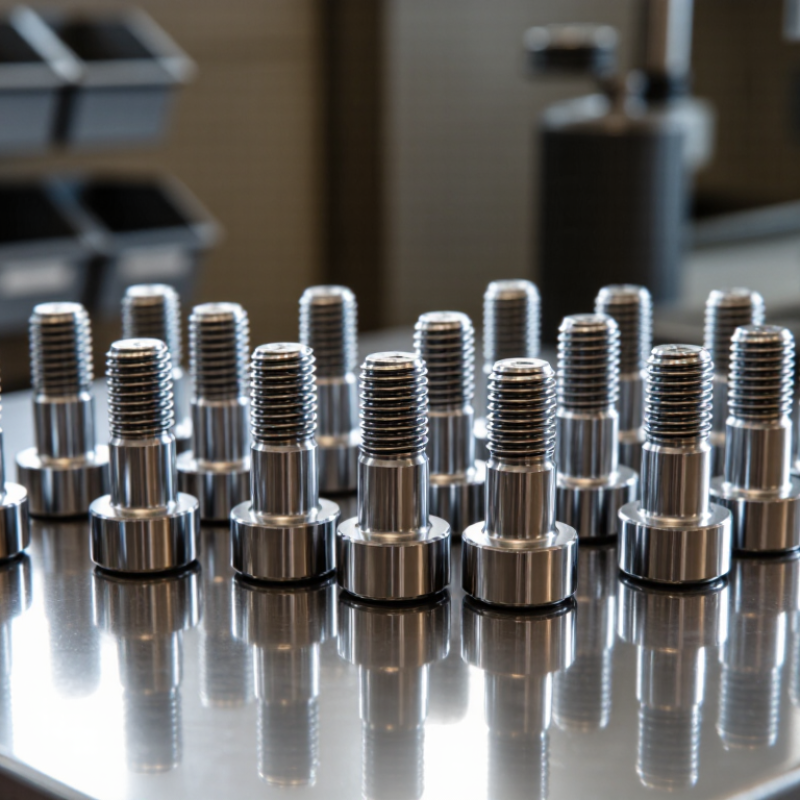
Top Resistance Machine Screw Suppliers Worldwide

What Are Resistance Machine Screws and Where Are They Used?

Resistance machine screws are fasteners used to assemble and maintain strength-training equipment. They are not electrical resistors. You will find them in weight stacks, cable towers, adjustable benches, pulley covers, and seat frames.

These screws usually have a uniform machine thread and require a matching threaded hole or nut. Common materials include carbon steel, stainless steel, and corrosion-resistant coated steel. The correct choice depends on load, vibration, moisture, and frame design. For example, a screw beneath a moving pulley needs reliable thread engagement and stable tightening. A stainless screw may suit humid fitness rooms, but it can behave differently from carbon steel during installation.

Small details matter.

When evaluating worldwide suppliers, maintenance teams should request thread specifications, strength data, coating information, and dimensional drawings. Samples can reveal problems that a catalog misses, such as poor head fit or inconsistent threads. Torque guidance is also important, because overtightening may damage a frame or distort a cover. Under-tightening can create rattling sounds and gradual loosening.

A practical inspection should compare the original screw’s diameter, pitch, length, head style, and washer arrangement. Substitution is not automatically safe. I have seen replacement decisions focus on price while ignoring vibration and repeated loading. That approach needs reconsideration. Supplier reliability also includes stable batches, clear packaging, traceable material records, and responsive technical support. Fitness equipment works through repeated motion, so a screw that looks suitable may still fail in service.

Key Factors for Evaluating Global Resistance Machine Screw Suppliers

Top Resistance Machine Screw Suppliers Worldwide

Global resistance machine screw sourcing requires more than comparing unit prices. The World Steel Association reported about 1.89 billion tonnes of crude steel production in 2023. That scale makes material traceability essential. Ask suppliers for heat numbers, mill certificates, and batch-level records. Confirm whether screws meet ISO 898-1 or the relevant ASTM mechanical requirements. A certificate alone is not proof of every shipment.

Supplier evaluation should include tensile testing, hardness checks, coating thickness, and dimensional inspection. ASTM F606/F606M provides recognized methods for testing externally threaded fasteners. Request recent inspection reports, not only sample documents. ISO’s 2023 Survey recorded more than one million ISO 9001 certificates worldwide. Still, certification shows a management system, not perfect product quality. I have seen attractive documents hide weak sampling plans. That risk deserves attention.

Tips: Compare defect rates, lead-time history, and corrective-action speed. Request three recent batches. Check thread fit with calibrated gauges. Review packaging, too; damaged threads can appear after production. A supplier with clear answers is often safer than one offering the lowest quotation. Yet this judgment is imperfect. Recheck critical suppliers annually, especially after material, tooling, or factory changes.

Major Manufacturing Regions and Supplier Capabilities Worldwide

Top Resistance Machine Screw Suppliers Worldwide

Manufacturing capacity differs sharply by region. World Steel Association data reports 1.88 billion tonnes of crude steel production in 2024. Asia produced most of it, supporting strong wire-rod, cold-heading, and heat-treatment networks. East Asian suppliers often combine automated forming with optical inspection. This suits resistance machines, where thread accuracy and fatigue performance matter.

Europe remains important for stainless steel, alloy grades, and documented process control. Suppliers commonly provide material certificates, batch traceability, and controlled plating systems. North American manufacturers often focus on engineered fasteners for industrial equipment, transport, and energy applications. Their capabilities may include custom threading, prototype production, and tighter inspection records. These regional strengths should be checked against ISO 898-1, ASTM F606/F606M, and the buyer’s torque requirements.

India and Southeast Asia are expanding cold-forging and finishing capacity. Their advantages can include flexible order quantities and competitive conversion costs. However, capability is not uniform. The International Trade Centre and UN Comtrade classify many screw and fastener shipments under HS 7318, making trade-flow comparisons possible, but customs data does not prove product quality. That limitation matters. A low quotation may conceal longer validation cycles, inconsistent coating thickness, or weak packaging controls. Good suppliers should show process audits, sample test results, and corrective-action records. Not every factory measures the same way. Buyers need to verify the details.

Quality Standards, Materials, and Testing Requirements

Top Resistance Machine Screw Suppliers Worldwide

Reliable resistance machine screw suppliers begin with controlled quality systems. Look for documented processes aligned with ISO 9001 principles. Material certificates should identify grade, heat number, and production route. Common choices include carbon steel, alloy steel, and stainless steel. Each material suits different loads, corrosion risks, and operating temperatures.

Mechanical performance needs measurable evidence. Tensile strength, proof load, hardness, and torque testing should follow relevant technical standards. For metric fasteners, ISO 898-1 can support property-class verification. ASTM methods may apply when specified by the buyer or equipment designer. Suppliers should inspect thread dimensions with calibrated gauges. Surface coatings also require attention. Zinc, nickel, and other finishes must be checked for thickness, adhesion, and visual defects. Salt-spray testing can indicate corrosion resistance, but it cannot perfectly predict field life.

Ask for batch-level inspection reports. Traceability matters. A dependable supplier can connect test results to the delivered lot. Packaging should prevent thread damage, moisture exposure, and mixed sizes.

Samples should be tested before large production orders. Small details reveal process discipline.

No supplier is perfect. Some certificates may omit important test conditions. That weakness deserves questions, not assumptions. In my experience, clear communication often separates capable manufacturers from merely inexpensive sources. Audits, sample checks, and independent laboratory testing strengthen purchasing decisions. Still, testing plans should match the machine’s actual vibration, load, and maintenance environment. Generic compliance alone may not be enough.

How to Select the Right Resistance Machine Screw Supplier

Selecting the right resistance machine screw supplier requires more than comparing unit prices. The global fitness equipment market was valued at about USD 16.4 billion in 2023, according to Grand View Research. That scale increases pressure on suppliers to deliver consistent parts, not occasional low-cost batches.

Start with material control and dimensional evidence. Request mill certificates, coating specifications, thread-gauge records, and batch traceability. Screws used near sweat, cleaning chemicals, and repeated vibration need suitable corrosion resistance. Ask whether the supplier tests torque, tensile strength, and coating adhesion. ISO 20957-1 provides useful safety guidance for stationary training equipment, although it does not replace your own validation process.

Test samples before signing a long-term agreement. Install screws in real frames, then inspect thread fit, head seating, and loosening after repeated movement. Small details matter. A supplier should explain its inspection frequency and corrective-action process clearly. The 2024 Global Wellness Economy Monitor reported continued growth in physical-activity markets, but expanding demand can expose weak quality systems. Do not accept a polished audit file as complete proof. I have seen specifications look excellent while mixed batches caused assembly delays. That risk deserves attention.

Compare lead time, minimum order quantity, packaging, engineering support, and replacement responsiveness. A dependable supplier communicates problems early and preserves the same material grade across repeat orders. Price still matters, but the cheapest screw can become the most expensive component after rework, field failures, or downtime.

Top Resistance Machine Screw Suppliers Worldwide - How to Select the Right Resistance Machine Screw Supplier
Evaluation Dimension Verified Industry Benchmark Recommended Supplier Target Documents or Evidence to Request
Product Application Machine screws used in resistance-training equipment commonly secure guards, brackets, covers, adjustment assemblies, and frame components. Selection depends on load, vibration, corrosion exposure, and access for installation. Supplier should provide application-specific recommendations for thread size, length, head style, drive type, material, and locking method. Technical drawing review, application questionnaire, sample-fit report, and installation torque guidance.
Available Sizes and Threads Common metric ranges include M3–M10, while inch-based requirements often use #4–3/8 in. Thread pitch and dimensional tolerances should conform to ISO 965 or the specified national/inch thread standard. Stock or production capability covering the required diameter, length, pitch, head configuration, and tolerances without unauthorized substitutions. Dimensioned drawings, thread gauges, first-article inspection reports, and sample measurements using calibrated equipment.
Material and Strength Class Carbon and alloy steel fasteners are commonly specified by ISO 898-1 property classes such as 8.8, 10.9, and 12.9. Stainless steel fasteners are covered by ISO 3506-1, including common austenitic grades such as A2 and A4. Material and property class must match the equipment load, tightening torque, fatigue exposure, and corrosion environment. Avoid replacing a specified class with a lower class. Mill test certificate, material certificate, mechanical test report, hardness report, and batch traceability records.
Corrosion Protection Typical options include plain steel, zinc electroplating, zinc flake coatings, black oxide, and stainless steel. Coating performance varies by process, thickness, environment, and post-treatment. For indoor gym environments, select a finish suitable for perspiration and cleaning chemicals. For humid or coastal locations, consider stainless steel or a tested high-performance coating. Coating specification, coating thickness report, salt-spray test result where applicable, and corrosion-resistance test method.
Dimensional and Thread Quality Critical dimensions include thread diameter, pitch, length, head height, head diameter, drive recess, and concentricity. Functional thread inspection is more meaningful than visual inspection alone. 100% visual inspection for critical appearance defects plus statistically controlled dimensional inspection and functional thread gauging. Control plan, inspection standard, calibrated gauge records, capability data, and sample inspection report.
Torque and Joint Reliability Joint performance depends on screw strength, friction, coating, lubrication, washer use, thread engagement, and the mating material. Torque values should not be copied between different finishes without validation. Supplier should provide recommended tightening torque or support joint testing for the exact screw, coating, nut, insert, and assembly conditions. Torque-tension test data, prevailing torque data for locking versions, assembly trial results, and written installation instructions.
Quality Management ISO 9001 certification is a widely used quality-management benchmark. Automotive-style control methods such as process capability studies and corrective-action reports can provide additional confidence. Current third-party certification, documented incoming and in-process inspections, nonconformance control, and traceable corrective actions. Valid certificate, audit summary, process flow chart, control plan, inspection records, and sample corrective-action report.
Chemical and Regulatory Compliance Products supplied to the European market may need to comply with RoHS Directive 2011/65/EU and REACH Regulation (EC) No. 1907/2006. Coatings and plating processes can affect compliance status. Supplier should provide a current compliance declaration covering the screw material, coating, lubricant, packaging, and any restricted substances. RoHS declaration, REACH statement, material composition declaration, safety data where relevant, and plating-substance information.
Testing Capability Mechanical and dimensional fastener testing may follow ISO, ASTM, or equivalent national standards. ASTM F606/F606M is commonly used for mechanical testing of externally and internally threaded fasteners. Access to tensile, proof-load, hardness, torque, coating, and dimensional testing either in-house or through an accredited independent laboratory. Laboratory accreditation, test-method list, recent test reports, equipment calibration certificates, and batch test records.
Minimum Order Quantity and Sampling MOQ varies by material, size, head style, coating, tooling requirement, and whether the item is standard or customized. Custom cold-heading tooling may increase initial cost and lead time. Supplier should offer a clearly defined sample quantity, pilot-run quantity, production MOQ, tooling charge, and repeat-order threshold. Formal quotation, sample policy, tooling ownership terms, pilot-order conditions, and written change-control procedure.
Lead Time and Supply Continuity Lead time is affected by raw-material availability, forming capacity, secondary machining, heat treatment, coating, inspection, and international transportation. Supplier should provide separate sample, first-production, and repeat-order lead times, along with capacity information and a documented continuity plan. Production schedule, capacity statement, on-time-delivery history, safety-stock proposal, and business-continuity plan.
Packaging and Identification Fasteners can be damaged, mixed, or contaminated during transport if packaging is not matched to surface finish and part geometry. Moisture-resistant packaging, clear part identification, lot segregation, quantity control, and protection against thread damage. Packaging specification, carton and inner-pack labels, lot-traceability example, packing list, and transport test or drop-test information where required.
Commercial Evaluation Total landed cost includes unit price, tooling, inspection, packaging, freight, duties, nonconformance risk, and the cost of line stoppages or field failures. Compare suppliers using total cost of ownership rather than unit price alone. Require transparent pricing for material, coating, testing, tooling, and logistics. Itemized quotation, payment terms, Incoterms, warranty terms, nonconformance-cost policy, and annual price-review conditions.
Supplier Selection Score A weighted scorecard improves consistency when comparing anonymous or international suppliers. Technical compliance should be a prerequisite rather than being offset solely by a low price. Suggested weighting: quality and traceability 25%, technical capability 20%, corrosion and material compliance 15%, delivery reliability 15%, total cost 15%, service and communication 10%. Completed supplier questionnaire, sample approval, factory or process audit, first-article approval, and periodic supplier-performance review.

FAQS

What should buyers check before choosing a resistance machine screw supplier?

Check material traceability, recent test reports, defect rates, delivery history, and corrective-action speed.

Which documents help confirm material quality?

Ask for mill certificates, heat numbers, material grades, and batch-level production records.

Which materials are commonly used for resistance machine screws?

Carbon steel, alloy steel, and stainless steel are common choices.

What mechanical tests should suppliers provide?

Request tensile strength, proof load, hardness, torque, and dimensional inspection results.

How can buyers verify thread accuracy?

Use calibrated thread gauges and inspect dimensions from multiple production batches.

Why is coating inspection important?

Measure coating thickness, adhesion, surface defects, and moisture protection.

Do regional manufacturing differences affect supplier selection?

Different regions may offer strengths in automation, stainless materials, custom threading, or flexible order quantities.

How should buyers assess a supplier’s quality system?

Review inspection plans, sampling methods, process audits, and corrective-action records.

When should suppliers be rechecked?

Reassess critical suppliers annually and after changes in materials, tooling, or factory processes.

Conclusion

Resistance Machine Screw is a specialized fastening component designed to support reliable assembly in equipment exposed to mechanical stress, vibration, heat, or demanding production conditions. These screws are commonly used in industrial machinery, electrical systems, automotive equipment, structural assemblies, and other applications where strength, dimensional accuracy, and long service life are essential. Understanding their design, thread type, load capacity, corrosion resistance, and installation requirements helps buyers choose the right solution for each project.

When evaluating worldwide suppliers, purchasers should compare manufacturing experience, production capacity, material options, quality control systems, delivery reliability, customization services, and technical support. Major manufacturing regions may offer different advantages in precision machining, automation, surface treatment, and cost efficiency. Important considerations also include compliance with recognized quality standards, traceable raw materials, hardness and tensile testing, dimensional inspections, and batch consistency. The most suitable supplier should provide dependable documentation, stable product performance, clear communication, and flexible support from sampling through long-term production.

Oliver

Oliver

Oliver is a seasoned marketing professional with a wealth of expertise in driving brand awareness and engagement. With a deep understanding of our company's product offerings, he consistently delivers high-quality content that enriches our professional blog. His insights not only shed light on......