Choosing the right Stainless Pan Head Screw manufacturer requires more than comparing catalog prices. Buyers must examine material grades, forming accuracy, surface treatment, and production consistency. A reliable supplier should clearly identify stainless steel compositions, such as 304 or 316, and explain how each grade performs in humid, marine, or industrial environments. Small details matter. A clean Phillips recess, even head profile, and smooth threads can prevent installation delays and damaged components.
This guide reviews leading Stainless Pan Head Screw manufacturers worldwide through practical purchasing criteria. We consider manufacturing experience, quality systems, testing procedures, customization capacity, and international supply reliability. Factory audits, sample inspections, and traceable documentation provide stronger evidence than promotional claims alone. Some manufacturers may excel in volume production, while others offer better support for prototypes or nonstandard dimensions. Neither option suits every project.
Real-world performance can still vary.
Packaging quality, delivery communication, and technical response often reveal a supplier’s maturity. We also examine corrosion resistance, dimensional tolerances, batch consistency, and compatibility with automated assembly equipment. These factors help engineers, distributors, and procurement teams make more defensible decisions. However, rankings should not be treated as permanent. Manufacturing capabilities change, certifications expire, and customer requirements differ. Independent verification remains essential before placing a large order. A thoughtful comparison should recognize both strengths and limitations, including areas where available information is incomplete or difficult to confirm.
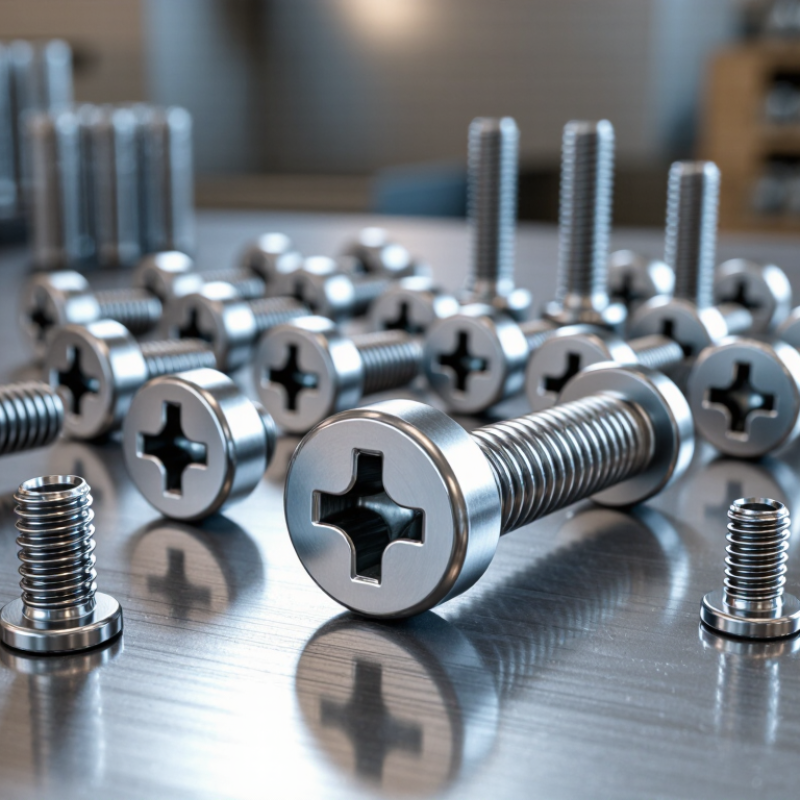
A stainless pan head screw is more than a bright, corrosion-resistant fastener. ISO 3506-1:2020 classifies austenitic stainless steel fasteners by material grade and mechanical property class.
A2 commonly contains 15–20% chromium and 8–19% nickel. A4 typically contains 16–20% chromium, 10–15% nickel, and 2–3% molybdenum. That molybdenum addition improves resistance in chloride-rich environments, such as coastal air or damp processing areas.
A2 is often selected for indoor equipment, furniture, and general construction. A4 is usually more suitable near seawater, salts, and chemical exposure. Neither grade is automatically immune to staining.
Surface contamination, trapped moisture, and poor installation can still cause rust marks. The shortcut “A4 always wins” is convenient, but incomplete.
ISO property classes also matter. A2-70 and A4-70 indicate a nominal 700 MPa tensile strength, while “80” indicates 800 MPa.
Thread damage can appear before the screw reaches its rated load. Apply steady torque, keep threads clean, and avoid mixing unsuitable metals.
Practical inspections should check head seating, thread condition, and washer contact.
The International Stainless Steel Forum reported global stainless steel production of about 58.4 million tonnes in 2023. This large material base supports broad supply, yet chemistry certificates remain essential.
Responsible manufacturers should provide traceability, dimensional inspection, and batch test records.
I would not rely on appearance alone. It looks professional, but it proves very little.
Stainless pan head screw manufacturers are responding to wider demand across construction, machinery, electronics, and outdoor equipment. Corrosion resistance remains the key buying reason, especially in coastal projects and humid production areas. Global trade data often uses HS 7318 for screws and other fasteners, but stainless products are not always separated clearly. This makes country comparisons useful, yet imperfect.
Recent customs records show strong movement through Asian, European, and North American supply chains. Demand growth is linked to infrastructure spending, equipment exports, and replacement cycles. Buyers should examine shipment value, volume, average unit price, and year-on-year change together. A rising value with falling volume may indicate higher material or processing costs. That detail is easy to miss. Manufacturers with stable inspection systems usually provide clearer dimensional reports, salt-spray results, and material certificates. Still, certificates alone do not prove consistent production quality.
Tips
Compare at least three years of trade data before judging growth. Check whether figures cover screws, bolts, or mixed fasteners. Ask manufacturers about stainless grades, thread accuracy, head diameter, packaging, and batch traceability. Test samples under realistic moisture and torque conditions. A polished surface can look reliable while hiding weak thread performance. Market forecasts also deserve caution; exchange rates, freight costs, and regional construction cycles can distort short-term metrics. A practical supplier review should combine trade evidence with factory audits, sample testing, and delivery records.
Choosing top stainless pan head screw manufacturers requires regional evidence, not polished catalogs. The ISSF Stainless Steel in Figures 2024 reports global crude stainless production at 58.4 million tonnes in 2023. China accounted for about 36.2 million tonnes. This scale supports broad cold-heading and thread-rolling capacity, but it does not prove screw quality. In East and Southeast Asia, buyers should request monthly output, automatic inspection rates, and heat-lot traceability. Small details matter, such as a documented 304 or 316 wire receipt.
European manufacturers often compete through engineering depth, surface control, and documentation. The ISO Survey 2023 counted 1,265,216 ISO 9001 certificates worldwide and 529,853 ISO 14001 certificates. Certification is useful evidence, not a substitute for process audits. North American plants may offer shorter delivery routes and strong ASTM-based documentation. Verify actual press capacity, in-house sorting, salt-spray testing, and whether plating is outsourced.
Product range separates a catalog seller from a capable producer. Check pan head cross-recessed, star-drive, and slotted options. Review metric and inch threads, coarse and fine pitches, plus passivated or coated finishes. Ask for tensile, torque, dimensional, and coating reports tied to each shipment. UN Comtrade HS 7318 data can compare regional export patterns, although it includes many fastener types. That limitation deserves attention. I would rank transparent capacity data above impressive machinery photographs. It is less glamorous, but more reliable.
Performance comparisons should begin with ASTM F593, not catalog claims. The specification covers stainless steel bolts, screws, and studs, with requirements for chemical composition, mechanical strength, and testing. Tensile results should be verified under ASTM F606/F606M, using controlled specimens and documented lot traceability. Pan head geometry can complicate testing because the head may deform before the shank reaches its rated capacity. That detail is often overlooked.
Torque needs careful interpretation. ISO 16047 torque-tension testing shows that friction strongly controls achieved preload. Dry stainless threads may produce inconsistent readings, while lubrication can significantly reduce installation torque. A screw tightened to 12 N·m is not automatically stronger than one tightened to 9 N·m. The actual clamp load matters. Real assembly trials should record torque, angle, lubricant, tool calibration, and prevailing temperature. Small differences become visible at the workbench.
Corrosion testing also needs restraint. ASTM B117 salt spray exposure is useful for comparison, but it does not reproduce every outdoor environment. The NACE IMPACT study estimated global corrosion costs near 3.4% of worldwide GDP, showing why material selection deserves engineering review. Stainless grades with similar appearances can behave differently near chlorides, crevices, and contaminated surfaces. The uncomfortable point is simple: polished appearance proves little. Independent reports, failed-sample analysis, and repeated testing provide more reliable evidence than a single impressive certificate.
Choosing a stainless pan head screw manufacturer requires more than comparing online prices. The right supplier should show controlled production, traceable materials, and consistent inspection records.
For automotive applications, IATF 16949 certification can indicate stronger process discipline. ISO 9001 supports documented quality systems across broader industries. Neither certificate guarantees perfect screws. Ask for the certification scope, audit validity, and corrective-action records. Request material certificates for grades such as 304 or 316, dimensional reports, and thread-gauge results. A practical test helps. Order samples and inspect head diameter, drive fit, thread consistency, and surface finish.
MOQ can affect both cash flow and storage. A low MOQ may suit prototypes, but larger batches often reduce unit cost. Confirm whether MOQ changes by size, finish, packaging, or custom drawing. Lead time should include production, inspection, and shipping. Ask how the supplier handles urgent revisions or delayed raw materials. Get this in writing.
Cost needs a wider view. Include tooling, packaging, freight, duties, sampling, and rejected-part risk. The cheapest quotation may hide important expenses. I have seen schedules look convincing until a special finish required extra processing. That deserves careful questioning. Compare at least three written quotations with identical specifications. Review communication speed and technical answers, not only the final number. Reliable suppliers explain limits clearly. That honesty can be more valuable than a polished sales promise.
| Anonymous Supplier Profile | Typical Production Region | Common Stainless Materials | IATF 16949 Evidence | ISO 9001 Evidence | Typical MOQ | Typical Lead Time | Indicative Cost Level | Best-Fit Application |
|---|---|---|---|---|---|---|---|---|
| Profile A Automotive-focused cold former |
East Asia and Southeast Asia |
A2 stainless steel, commonly equivalent to 304; A4 stainless steel, commonly equivalent to 316 |
Required / verify certificate Suitable where the supplier performs production for automotive supply chains. Confirm certificate scope, site address, expiry date, and IATF database status. |
Expected Verify the current certificate and whether the listed manufacturing site is covered. |
10,000–50,000 pieces, depending on tooling and specification | 4–8 weeks after drawing approval and material confirmation | Medium to high | Automotive assemblies, electronics, safety-related or traceability-sensitive applications |
| Profile B High-volume export manufacturer |
East Asia |
304 stainless steel; 316 stainless steel on request; other austenitic grades subject to availability |
Customer-dependent IATF 16949 may be available at selected plants, but it should not be assumed from ISO 9001 certification alone. |
Commonly available Request the certificate number, certification body, scope, and validity period. |
5,000–30,000 pieces for standard sizes; higher for custom parts | 3–6 weeks for standard products; 6–10 weeks for custom tooling | Low to medium | General industrial equipment, enclosures, appliances, and export distribution |
| Profile C Precision custom fastener producer |
Central Europe and Western Europe |
304/1.4301 stainless steel; 316/1.4401 or 316L/1.4404; material grade confirmed by mill certificate |
Available from selected suppliers Particularly relevant for suppliers serving European automotive and mobility customers. |
Commonly available Audit the certificate scope and confirm that cold forming, thread rolling, heat treatment, and inspection are included where applicable. |
2,000–10,000 pieces, subject to diameter, length, and tooling requirements | 6–12 weeks for new custom parts; 3–6 weeks for repeat orders | High | High-precision assemblies, medical equipment, industrial automation, and demanding tolerances |
| Profile D Regional standard-product supplier |
North America |
18-8 stainless steel, generally associated with 304-type material; 316 stainless steel for corrosion-sensitive applications |
Usually not required IATF 16949 is normally requested only when the supplier is part of an automotive production chain. |
Varies by supplier Certification is useful for controlled purchasing but should be checked against the actual production location. |
500–5,000 pieces from stock or distribution inventory; higher for made-to-order parts | 1–3 weeks from stock; 5–9 weeks for production orders | Medium to high | Maintenance, repair, distribution, small-batch production, and domestic replenishment |
| Profile E Cost-competitive mass producer |
South Asia and Southeast Asia |
304 stainless steel; 316 stainless steel subject to order quantity; verify chemical composition before approval |
Often unavailable This profile may be suitable for non-automotive applications, but automotive customers should require documented process controls and an approved quality system. |
May be available Do not treat a certificate logo or marketing statement as sufficient evidence; validate the issuing body and scope. |
20,000–100,000 pieces, especially for custom head dimensions or packaging | 6–12 weeks, including production planning and international shipment | Low | Large-volume commercial products where price is prioritized and validation resources are available |
| Profile F Specialty corrosion-resistant producer |
Japan, South Korea, and selected European locations |
316/316L stainless steel; duplex or specialty grades when technically justified; full material traceability usually requested |
Application-specific IATF 16949 is relevant only when the supplier serves automotive production; other sectors may use different qualification systems. |
Commonly available Confirm whether laboratory testing, surface treatment, and subcontracted processes are included in the certified scope. |
1,000–10,000 pieces, depending on grade and special inspection requirements | 6–14 weeks for specialty grades or additional testing | High | Marine, chemical processing, outdoor infrastructure, and highly corrosive environments |
Corrosion resistance drives demand in coastal construction and humid production areas. They also serve machinery, electronics, outdoor equipment, and infrastructure projects. That is the main reason.
Compare shipment value, volume, average unit price, and yearly changes together. Trade codes may combine screws, bolts, and other fasteners. Country comparisons are useful, but they are not perfectly precise.
It may indicate higher material, processing, freight, or exchange-rate costs. A larger value does not always mean stronger demand. Check the details.
Ask for the stainless grade, material certificate, and batch traceability records. Common examples include grades 304 and 316. Confirm that documents match the delivered batch.
Inspect head diameter, drive fit, thread accuracy, and surface finish. Test samples under realistic moisture and tightening conditions. A polished surface can hide weak threads. Test it.
No certificate guarantees perfect production. Review certification scope, audit validity, inspection records, and corrective actions. Factory audits and repeat samples provide stronger evidence.
Check whether quantity requirements change by size, finish, packaging, or custom drawing. A low minimum order may suit prototypes. Larger batches can reduce unit cost but increase storage pressure.
Include production, inspection, packaging, and shipping time. Ask how delayed materials or urgent design changes are handled. Get the schedule in writing. Plans can slip.
Include tooling, packaging, freight, duties, sampling, and rejected-part risk. Compare at least three quotations using identical specifications. The lowest price may conceal extra processing or replacement costs.
Combine trade evidence, factory audits, sample testing, and delivery records. Review communication speed and technical answers, not only price. Forecasts can mislead during exchange-rate or construction-cycle changes. I would still question confident predictions.
This article provides a practical overview of the Stainless Pan Head Screw market, beginning with the fundamentals of stainless grades covered by ISO 3506-1. It explains the differences between A2 and A4 stainless steel, including their chemical composition, corrosion resistance, and typical applications. The discussion then examines global demand, trade activity, and market growth, offering useful context for buyers and industrial planners.
It also compares leading manufacturers by region through production capacity, certifications, and product range, without focusing on specific brands. Performance factors include ASTM F593-related testing, torque behavior, corrosion resistance, tensile strength, and installation reliability. Finally, the article outlines how to evaluate suppliers by reviewing ISO 9001 or IATF 16949 certification, minimum order quantities, lead times, quality control, technical support, and total cost. This framework helps businesses select dependable fastener partners for construction, machinery, automotive, and general industrial applications.

Krui Hardware