Choosing the right Stainless Tee Head Bolt supplier requires more than comparing prices or polished product photographs. These fasteners may sit inside solar frames, rail systems, food-processing equipment, or exposed architectural joints. Their T-shaped heads must fit accurately, while the stainless grade must resist corrosion under real service conditions.
The International Stainless Steel Forum reported global crude stainless steel production at about 58.4 million tonnes in 2023. That figure signals strong material availability, but it does not guarantee consistent bolt quality. ASTM F593 and ISO 3506-1 provide useful references for stainless fastener grades, mechanical properties, and marking practices. However, supplier data can remain incomplete. Some websites show grade labels without mill certificates, lot numbers, or dimensional tolerances. That deserves scrutiny.
Harry Brearley, the metallurgist associated with stainless steel’s early development, offered a practical warning: “There is no such thing as stainless steel; it is only stain-resistant steel.” His idea remains relevant when evaluating Stainless Tee Head Bolt suppliers. Grade 304 may suit ordinary indoor exposure, while 316 often performs better near chlorides. Neither choice is automatically correct. Joint design, surface treatment, installation torque, and cleaning conditions also matter.
This guide examines ten leading suppliers through manufacturing experience, inspection systems, customization ability, export reliability, and technical documentation. It considers evidence from company records, industry reports, and recognized standards. The ranking is not perfect. Supplier capacities change, and published claims may require independent verification. A careful buyer should request samples, certificates, and test results before approving production.
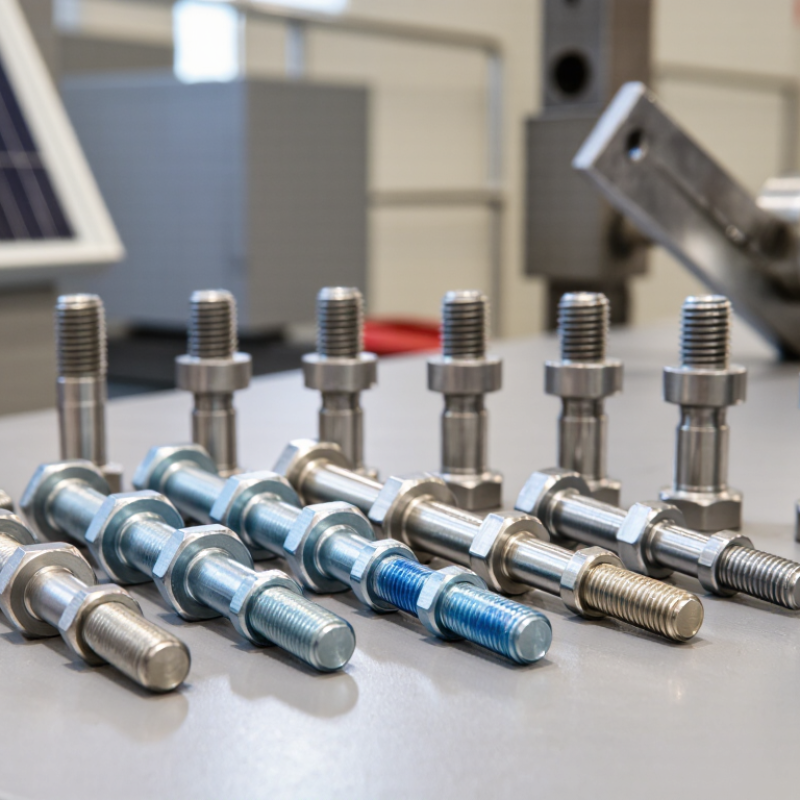
A stainless tee head bolt has a T-shaped head that slides into a matching channel or T-slot. When turned, the head locks against the channel walls and holds the connected part securely. This design avoids drilling through the supporting frame. It is common in aluminum profiles, solar mounting rails, machine frames, and adjustable pipe supports.
Most stainless tee head bolts use 304 or 316 stainless steel. Grade 304 suits indoor areas and ordinary outdoor conditions. Grade 316 offers better resistance near saltwater, chemicals, and persistent moisture. The bolt’s strength still depends on its diameter, thread accuracy, head size, and mating channel. A polished surface looks attractive, but it does not replace correct loading calculations. In practice, installers should check whether the head fully turns inside the slot. A slightly wrong head width can cause slipping. That detail is easy to miss.
Tips: Confirm the slot dimensions before ordering. Match the thread with the nut or flange. Check the stainless grade, thread standard, surface condition, and batch inspection records. Apply steady torque, not excessive force. Over-tightening can damage soft aluminum channels or distort the bolt head. For supplier evaluation, request dimensional drawings, material certificates, sample testing, and evidence of quality control. A low price may reflect thinner material or inconsistent threading, though this is not always obvious from photographs.
When evaluating China’s top stainless tee head bolt suppliers, specifications should guide the shortlist. World Stainless reported approximately 62.2 million tonnes of global stainless crude steel production in 2024. This scale increases material choice, but not necessarily consistency. Request the precise grade, such as 304 or 316, along with heat numbers and mill test certificates. Chemical composition should match ASTM F593 or ISO 3506 requirements. A certificate without traceability is weak evidence.
Check thread diameter, pitch, tolerance, head width, head thickness, and slot fit against approved drawings. For load-bearing applications, review tensile strength, proof load, elongation, and hardness test results. ISO 3506-1 identifies mechanical property classes for corrosion-resistant stainless fasteners, while ASTM F594 covers stainless nuts used with compatible bolts.
Surface condition also matters. Ask whether parts are pickled, passivated, polished, or simply cleaned. A bright surface can still conceal iron contamination. It happens.
Supplier reliability requires more than a low quotation. Compare sampling records, dimensional inspection reports, calibration certificates, and batch-level traceability. EN 10204 Type 3.1 documentation is useful for controlled projects. Ask for salt-spray or corrosion test data only when the test method matches the service environment. Packaging deserves attention too: mixed lots, damaged threads, and wet cartons can undermine good production. My own review would include a small trial order and torque testing, because photographs and sample certificates never reveal every production weakness.
China’s Top 10 Stainless Tee Head Bolt Suppliers should be assessed by manufacturing capability, not ranking claims alone. A strong shortlist includes suppliers experienced in cold heading, precision machining, and stainless steel forming. They should support common grades such as 304 and 316, plus custom dimensions for industrial assemblies.
Reliable suppliers provide material test certificates, dimensional inspection reports, and clear thread specifications. Their production teams should control head thickness, shank length, and thread accuracy. These details matter when bolts slide through tracks or secure equipment under vibration. ISO 9001 certification can support consistency, but it does not replace independent sample testing. In my experience, a polished catalogue often hides weak quality control.
Tips: Request five to ten samples before placing a bulk order. Check thread fit with your actual nut or channel. Ask for hardness, tensile, and salt-spray data when corrosion exposure is expected. Confirm packaging, lead time, and replacement procedures in writing. A supplier may promise tight tolerances, yet inspection results can vary between batches. That is worth questioning. Also review factory photos, audit records, and export experience carefully. The best supplier is not always the cheapest one; it is the one that repeatedly delivers usable bolts with traceable materials and stable dimensions.
| Rank | Supplier Profile | Typical Material | Common Thread Sizes | Thread Standard | Head Style | Surface Finish | Typical MOQ | Typical Lead Time | Quality Documentation |
|---|---|---|---|---|---|---|---|---|---|
| 1 | Profile A — high-volume cold-heading production | AISI 304 / 18-8 stainless steel | M4–M12 | Metric coarse | T-head with anti-rotation neck | Passivated or bright finish | 500–1,000 pieces | 15–25 working days | Material certificate and dimensional report |
| 2 | Profile B — corrosion-resistant industrial fastener production | AISI 316 / 316L stainless steel | M5–M16 | Metric coarse and fine | Square or rectangular T-head | Pickled and passivated | 300–800 pieces | 20–35 working days | Mill test certificate and inspection report |
| 3 | Profile C — custom-machined tee head bolt production | AISI 304, 316, and 316L | M6–M20 | Metric, UNC, and UNF by order | Custom head geometry | Machined, polished, or passivated | 100–500 pieces | 25–40 working days | Drawing approval and first-article inspection |
| 4 | Profile D — aluminum extrusion fastening specialist | AISI 304 stainless steel | M4–M10 | Metric coarse | Drop-in T-head | Natural stainless finish | 1,000–5,000 pieces | 10–20 working days | Basic material and dimensional documentation |
| 5 | Profile E — marine and outdoor application specialist | AISI 316 / 316L stainless steel | M5–M12 | Metric coarse | Wide-load T-head | Electropolished or passivated | 200–1,000 pieces | 20–30 working days | Material traceability and salt-spray data when required |
| 6 | Profile F — small-batch precision supplier | AISI 304 stainless steel | M3–M8 | Metric coarse and fine | Miniature T-head | Tumbled, polished, or passivated | 50–300 pieces | 15–30 working days | Inspection dimensions and thread-gauge record |
| 7 | Profile G — heavy-duty structural fastener production | AISI 316 stainless steel | M10–M24 | Metric coarse | Heavy T-head with large bearing area | Machined and passivated | 100–500 pieces | 30–45 working days | Mechanical test report and material certificate |
| 8 | Profile H — export-oriented standard parts production | AISI 304 stainless steel | M5–M12 | Metric coarse, UNC, and UNF | Standard T-head | Bright or passivated finish | 500–2,000 pieces | 15–25 working days | Certificate of conformity and packing list |
| 9 | Profile I — automated packaging and inventory supplier | AISI 304 / 18-8 stainless steel | M4–M10 | Metric coarse | Standard and drop-in T-head | Natural or passivated finish | 1,000–10,000 pieces | 7–18 working days | Batch traceability and quantity verification |
| 10 | Profile J — engineering-to-order manufacturer | AISI 304, 316, or 316L | M6–M20 | Metric or imperial by drawing | Fully customized T-head | Polished, brushed, or passivated | 50–500 pieces | 25–45 working days | Approved drawing, inspection plan, and final report |
When assessing China’s top ten stainless tee head bolt suppliers, manufacturing standards should come before price. Reliable producers usually work with ISO 9001 quality systems and follow relevant fastener standards, such as ISO 3506 or ASTM F593. Material certificates should identify the stainless grade, heat number, and test results. Request EN 10204 3.1 documentation for traceability.
Quality control must continue beyond incoming material checks. Experienced factories inspect thread dimensions with calibrated gauges, measure head geometry using optical equipment, and perform tensile or hardness tests on sampled batches. Positive material identification can confirm the alloy before production.
A clean inspection report should show batch numbers, equipment records, acceptance limits, and inspector approval. Small details matter.
Certifications need careful review. Check the issuing body, certificate scope, expiry date, and covered production site. A certificate can be valid yet irrelevant to custom tee head bolts. Ask for recent sample reports and independent inspection access. Salt spray testing may help with coating evaluation, but it does not replace correct stainless selection. No inspection plan is flawless. I would still question unclear records, uneven thread finishes, or polished samples that differ from bulk production. Photos are useful, but physical samples reveal more.
Selecting the right supplier requires more than comparing prices. Start with the bolt’s exact application, load, temperature, and installation method. Share clear drawings, thread dimensions, surface requirements, and required stainless steel grade. A capable supplier should explain material choices in practical terms. Ask for heat-lot traceability and independent test reports. Do not accept vague certificates.
Request production samples before placing a large order. Inspect the tee head, thread accuracy, surface finish, and packaging. A small sample can reveal poor machining or inconsistent polishing. Check whether the supplier controls production directly or relies heavily on outside workshops. Factory photos are useful, but a video inspection or site audit provides stronger evidence. It is not always convenient. It is still worthwhile.
Review quality procedures, inspection records, export experience, and response speed. Reliable suppliers should confirm tolerances, minimum order quantities, lead times, and replacement policies in writing. Ask for references from projects with similar requirements. Compare total cost, not only the unit price. Freight, testing, tooling, and rejected parts can change the calculation quickly. I have seen attractive quotations become expensive after revisions. That mistake is easy to repeat. Keep communication documented, approve a pre-production sample, and use staged payments tied to measurable quality checks.
Ask for the exact grade, such as 304 or 316. Request heat numbers and material certificates. A certificate without traceability is weak evidence. Do not rely on appearance alone.
Confirm thread diameter, pitch, tolerance, head width, and head thickness. Check the slot fit against approved drawings. Measure shank length too. Small differences can prevent proper installation.
Request tensile strength, proof load, elongation, and hardness results. These tests matter for load-bearing assemblies. Use test methods suited to the application. A generic report may not be enough.
Ask whether the parts are pickled, passivated, polished, or simply cleaned. Inspect for stains, scratches, and uneven polishing. A bright surface can still hide contamination. It happens.
Request five to ten samples before a bulk order. Test them with your actual nut or channel. Check thread fit, head shape, and surface finish. One sample can mislead you.
Request material certificates, dimensional inspection reports, and calibration records. Batch-level traceability is important. Controlled projects may require detailed inspection documents. Vague paperwork should prompt questions.
Compare total cost, not only the unit price. Include freight, testing, tooling, packaging, and rejected parts. A low quotation may become expensive later. I have seen this happen.
Ask about direct factory control and outside workshop use. Review audit records, production photos, and export experience. A video inspection can reveal useful details. It is not perfect. Approve a pre-production sample and document replacement terms.
This guide explains what a Stainless Tee Head Bolt is and why its tee-shaped head, corrosion resistance, and secure fitting make it suitable for industrial, construction, and equipment-assembly applications. It introduces the main specifications buyers should evaluate, including stainless steel grade, dimensional accuracy, thread type, strength, surface finish, head design, load capacity, and compatibility with the intended installation system.
The article also presents a structured comparison of China’s top 10 Stainless Tee Head Bolt suppliers without focusing on brand promotion, highlighting their manufacturing capabilities, customization options, production consistency, quality-control procedures, and relevant certifications. It further discusses the importance of international manufacturing standards, material traceability, inspection processes, packaging, delivery reliability, and technical support. Finally, readers receive practical guidance for selecting a supplier based on project requirements, order volume, budget, lead time, compliance expectations, and long-term product performance.

Krui Hardware